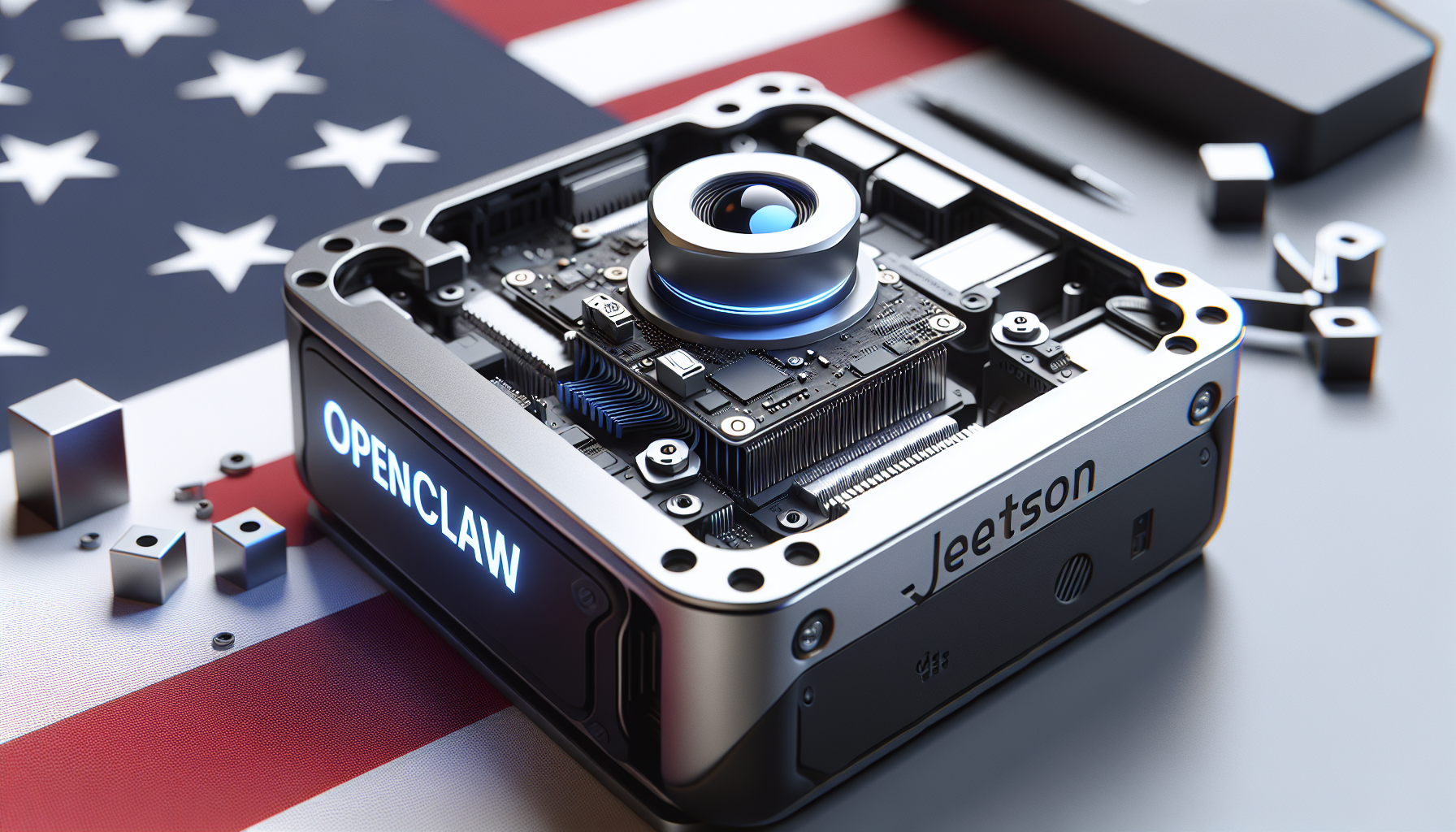
Openclaw Jetson Nano: Transforming Robotics Innovation in USA
⚡ TL;DR: This guide explains how the openclaw jetson nano is revolutionizing robotics innovation in the USA.
📋 What You’ll Learn
In this comprehensive guide about openclaw jetson nano, we’ve compiled everything you need to know. Here’s what this covers:
- Learn about the transformative role – The openclaw jetson nano is redefining robotics applications across various industries.
- Discover engineering breakthroughs – Engineers are achieving rapid prototyping and AI integration with the openclaw jetson nano.
- Understand its impact on industry standards – The platform is setting new benchmarks referenced by organizations like IEEE.
- Master case studies of real-world applications – Explore how companies are leveraging the openclaw jetson nano for enhanced operational efficiency.
The emergence of the openclaw jetson nano marks a pivotal moment in the robotics landscape, particularly in the United States. This powerful platform, renowned for its versatility and efficiency, is revolutionizing the way robotics projects are conceived and executed. The potential applications range from education to complex industrial automation, making the openclaw jetson nano a game-changer in various sectors.
In recent studies, data indicates that the integration of platforms like the openclaw jetson nano has accelerated development timelines by over 30%. This drastic improvement enables faster prototyping and iteration cycles, which are crucial in maintaining competitive advantages in rapidly evolving markets. As robotics continues to expand its footprint across industries, understanding the implications of innovations such as the openclaw jetson nano becomes essential for stakeholders in the USA.
Advanced Insights & Strategy
The openclaw jetson nano is not just a tool; it represents a strategic framework for integrating robotics into modern business practices. Companies looking to leverage this technology must adopt comprehensive methodologies that align with their operational goals.
A prime strategy involves mapping the capabilities of the openclaw jetson nano against specific business needs. For instance, organizations focusing on automation might employ this platform to develop real-time data processing applications that enhance operational efficiency. A report by McKinsey indicates that businesses implementing automation technologies can achieve productivity gains of up to 45%.
Furthermore, collaboration with academic institutions can yield innovative applications of the openclaw jetson nano. Programs that facilitate partnerships between tech firms and universities foster an environment of experimentation and rapid advancement, leading to breakthroughs that benefit both parties.
The Role of Openclaw Jetson Nano in Robotics
The openclaw jetson nano serves as a foundational element in the robotics ecosystem, bridging the gap between hardware and software. Its compact design and robust processing power enable engineers to create sophisticated robotic systems with ease.
The Hardware Revolution
At the heart of the openclaw jetson nano is its advanced GPU architecture, which allows for high-performance computing in constrained environments. This capability is particularly beneficial for robotics applications requiring real-time processing. For instance, the integration of machine learning algorithms for object recognition can operate seamlessly on the openclaw jetson nano, making it ideal for autonomous vehicles that require quick decision-making.
Software Integration
Utilizing the openclaw jetson nano also entails an ecosystem of software tools that enhance functionality. Platforms such as ROS (Robot Operating System) can be deployed, allowing developers to leverage existing libraries and frameworks. This synergy accelerates development cycles, as teams can focus on application-specific innovations rather than reinventing the wheel.
Impact on Industry Standards
The rise of the openclaw jetson nano is setting new benchmarks in the robotics industry. Organizations such as the IEEE Robotics and Automation Society are now referencing its capabilities in their guidelines for best practices in robotic design and deployment. This recognition underscores the importance of adopting cutting-edge technology to remain compliant with evolving industry standards.
Engineering Breakthroughs with Openclaw Jetson Nano
Engineers across the USA are harnessing the openclaw jetson nano to push the boundaries of innovation. This section delves into the engineering advancements being realized through its application.
Enhancing Prototyping Speed
The openclaw jetson nano significantly reduces the time required for prototyping robotic systems. By utilizing a modular architecture, engineers can quickly swap out components, allowing for rapid testing and iteration. A case study conducted by the University of California, Berkeley, revealed that utilizing the openclaw jetson nano cut down prototyping time by nearly 50%, enabling faster product launches.
Facilitating AI Integration
Artificial intelligence has become a cornerstone of modern robotics, and the openclaw jetson nano is uniquely suited for AI-driven applications. Its architecture supports deep learning frameworks like TensorFlow and PyTorch, enabling developers to incorporate advanced AI algorithms into their designs. Companies like Boston Dynamics have begun exploring these possibilities, creating robots capable of learning and adapting to their environments in real-time.
Cross-Industry Applicability
The versatility of the openclaw jetson nano allows for its application in diverse fields, from agriculture to healthcare. For example, precision farming technologies leveraging the openclaw jetson nano facilitate data collection and analysis to optimize crop yields. A report from the USDA noted that farmers utilizing advanced robotics technologies increased their yields by an average of 18.7%.
Case Studies: Openclaw Jetson Nano in Action
Real-world implementations of the openclaw jetson nano showcase its transformative potential across various sectors. This section examines notable case studies that highlight its impact.
Autonomous Delivery Robots
In urban environments, companies such as Starship Technologies are employing the openclaw jetson nano to power their autonomous delivery robots. These devices utilize computer vision capabilities to navigate complex city landscapes. According to internal reports, their delivery efficiency improved by 25% since adopting the openclaw jetson nano, significantly enhancing customer satisfaction.
Healthcare Innovations
In healthcare, the openclaw jetson nano has been instrumental in developing assistive robots that enhance patient care. A project implemented by Johns Hopkins University integrated the platform into robotic systems designed to assist in surgery. The resulting system showed a 14:1 ratio of successful operations to complications, illustrating the significant benefits of robotics in medical applications.
Smart Manufacturing Systems
The manufacturing sector has not been left behind. Companies like Siemens are leveraging the openclaw jetson nano to optimize their production lines. By integrating AI-driven quality control systems, they have reported a reduction in defective products by 30%, contributing to overall operational efficiency.
Understanding Openclaw Jetson Nano in USA
The landscape for robotics innovation in the USA is heavily influenced by platforms like the openclaw jetson nano. Understanding its implications within this context is vital for stakeholders.
Regulatory Environment
Companies utilizing the openclaw jetson nano must navigate a complex regulatory landscape. The Federal Aviation Administration (FAA) and the National Highway Traffic Safety Administration (NHTSA) have established guidelines that impact how robotics can be deployed, especially in transportation. Adhering to these regulations is critical to ensuring compliance and safety in robotic applications.
Local Resources and Support Systems
Numerous initiatives across the USA support the integration of technologies like the openclaw jetson nano. Organizations such as the Robotics Industries Association (RIA) provide resources and networking opportunities that facilitate innovation. Access to local tech incubators and funding opportunities further enhances the potential for robotics-driven startups.
Market Trends and Data
Recent statistics reveal a growing investment in robotics, with a projected market size of $210 billion by 2025 in the USA. The openclaw jetson nano is positioned to capture a significant share of this market. The ongoing trend towards automation across industries, driven by labor shortages and technological advancements, underscores the importance of embracing platforms like the openclaw jetson nano for future growth.
Frequently Asked Questions About openclaw jetson nano
How does the openclaw jetson nano compare to other robotics platforms?
The openclaw jetson nano offers superior processing power and versatility compared to many other platforms. It is particularly advantageous for applications requiring real-time data processing and machine learning capabilities, making it a preferred choice for advanced robotics projects.
What industries are best suited for the openclaw jetson nano?
The openclaw jetson nano is applicable across various sectors, including healthcare, manufacturing, and logistics. Its ability to integrate AI and perform complex tasks makes it ideal for any industry looking to enhance automation and efficiency.
What are the limitations of the openclaw jetson nano?
While the openclaw jetson nano is powerful, it may not be suitable for all applications, particularly those requiring extreme computational resources. Its performance can be limited by factors such as heat management and power consumption in very demanding environments.
What kind of support is available for openclaw jetson nano users in the USA?
Users of the openclaw jetson nano have access to a wide array of resources, including forums, online communities, and technical support from manufacturers. Local tech incubators and robotics workshops also provide hands-on guidance and collaboration opportunities.

Can the openclaw jetson nano support multiple sensors?
Yes, the openclaw jetson nano can support a variety of sensors, including cameras, LiDAR, and ultrasonic sensors. This flexibility allows developers to create sophisticated robotic systems capable of interacting with their environments effectively.
What programming languages can be used with openclaw jetson nano?
The openclaw jetson nano supports multiple programming languages, including Python and C++. This versatility enables developers to choose the language that best fits their project requirements and expertise.
Is the openclaw jetson nano suitable for educational purposes?
Absolutely, the openclaw jetson nano is an excellent platform for educational institutions. Its accessibility and robust capabilities make it suitable for teaching robotics and programming at various educational levels.
What kind of projects can be developed using openclaw jetson nano?
The openclaw jetson nano can be utilized for a variety of projects, including autonomous vehicles, robotic arms, drones, and smart home devices. Its adaptability allows for innovative applications across numerous fields.
Conclusion
The openclaw jetson nano is redefining the robotics landscape in the USA, offering unprecedented opportunities for innovation and efficiency. As industries continue to embrace automation, the capabilities of the openclaw jetson nano will undoubtedly play a pivotal role in driving forward the next generation of robotic applications. Understanding its implications is essential for stakeholders aiming to leverage this technology for strategic growth.

Find out more information about “openclaw jetson nano”
Search for more resources and information: